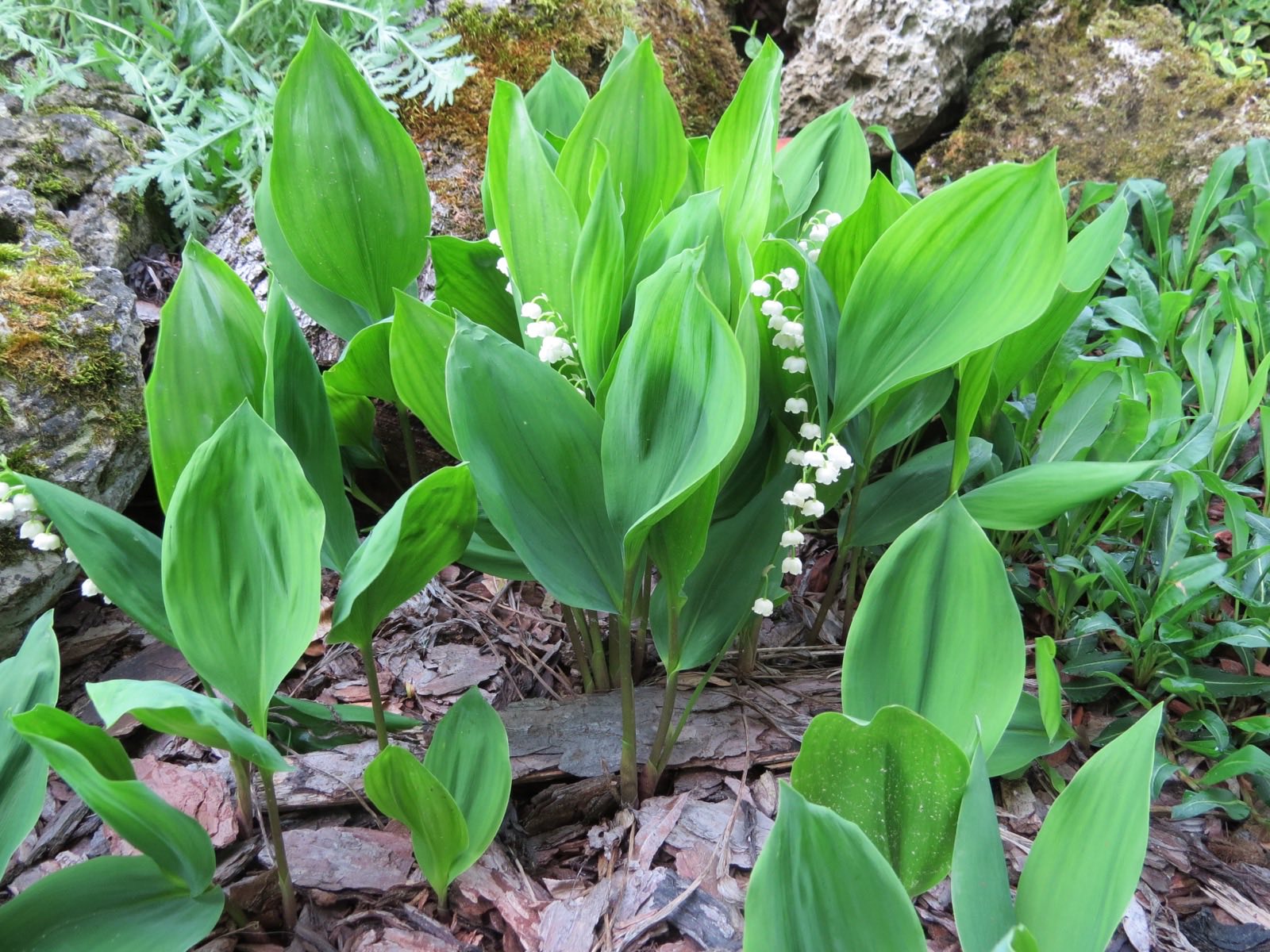
_Convallaria_majalis_(lily-of-the-valley)_at_Bichlh%C3%A4usl_in_Frankenfels,_Austria.jpg)
For once, the two almanacs agree. That's where the agreement ends.
The Old Farmer's Almanac names lily of the valley and hawthorn as May's pair. So does Farmers' Almanac, the separate company this site's March birth flower page found splitting from the Old Farmer's Almanac's chart that same month, adding jonquil and cherry blossom where the Almanac listed daffodil alone. May doesn't get that treatment. Both publications settle on the same two plants, no third option, no disputed alternate. February's listing keeps that same two-flower habit too, pairing violet with primrose on this site's February birth flower page.
What the agreement hides is that neither plant's name, origin story, or classification is anywhere near as settled as a two-flower chart implies. Lily of the valley has been shuffled between four different plant families since the modern naming system began, and the tradition most often cited for why it's associated with a specific date in May turns out to rest on a story French sources themselves frame as unconfirmed. Hawthorn has a folk name that's centuries older than the modern calendar it now gets compared against, and a species count nobody has ever pinned down twice the same way. January's own two-flower pairing, carnation and snowdrop, gets the same treatment on this site's January birth flower page, including a color myth of its own.
The French gift-giving custom is usually dated to 1561. The documented version starts well over three centuries later.
Search for why lily of the valley gets given away in France on May 1 and the answer nearly every site repeats is the same: in 1561, King Charles IX received a sprig as a good-luck charm, liked it enough to start handing bouquets to the women of his court, and the custom took root from there. Farmers' Almanac's own flower-lore page tells the story the same way, as settled history.
French Wikipedia's own article on May 1 tells it differently. Its "Traditions et superstitions" section introduces the Charles IX story with "selon une légende," according to a legend, and describes his actions throughout in the conditional tense, "aurait initié," "aurait décidé," would have initiated, would have decided, the grammatical marker French uses for a claim it isn't prepared to state as fact. The same entry places the custom's actual merger with the modern May 1 holiday at the start of the 20th century, not the 16th, more than three hundred years after the king Charles IX allegedly instructed. English Wikipedia's own article on lily of the valley lands on a similar timeline without mentioning Charles IX at all: it dates the tax-exempt street sale of the flower, the version of the custom still practiced today, to "the beginning of the 20th century." A more specific, independently sourced date backs that window up: French lifestyle outlet The Good Life France dates the custom's modern revival to a single documented event, Paris fashion houses handing lily of the valley to female clients and employees on May 1, 1900, a full 339 years after the king it's usually credited to.
A 1941 law, and a flower chosen partly for what it wasn't
One further layer sits between the legend and the present day. France's own historical record shows the government of Philippe Pétain, the collaborationist Vichy regime installed after the country's 1940 defeat, passed a law on April 24, 1941 making May 1 a paid public holiday under the name "Fête du Travail et de la Concorde sociale," Labor and Social Harmony Day. Multiple French historical accounts, including coverage from public broadcaster France Info and an academic chapter published by Cairn.info, describe the regime as favoring lily of the valley specifically because it carried no association with the political left, unlike the red eglantine, a wild rose that French socialist and labor movements had used as their own May 1 emblem since the late 19th century. The flower most people now think of as a simple spring gift was, for at least one stretch of the 20th century, also a substitution made for a reason that had nothing to do with spring.
The scientific name comes from a translation, not a description
Lily of the valley's genus name, Convallaria, is a Neo-Latin word coined by Carl Linnaeus himself, not inherited from classical usage. Per Wikipedia's entry on the plant, it derives from lilium convallium, "lily of the valleys," the Latin Vulgate Bible's rendering of a phrase in Song of Songs 2:1. European herbalists only began applying that biblical phrase to this specific plant sometime in the 15th or 16th century, meaning the name describes a translator's word choice from a much older religious text, not a botanist's observation of the plant itself.
The plant's family placement has moved three times since leaving the lily family. Wikipedia's taxonomy section traces it from the historical lily family, Liliaceae, into its own short-lived family, Convallariaceae, then into Ruscaceae, and finally into its current position: a subfamily, Convallarioideae, inside Asparagaceae, the same family as the vegetable. Three regional forms once treated as varieties of one species, from Europe, from China and Japan, and from the southern Appalachian Mountains, have also since been split into three separate species in their own right. And despite the sweetness the flower's name and folklore both promise, the entire plant is toxic: Wikipedia's chemistry section counts roughly 38 different cardiac glycosides in its tissue, compounds that interfere with heart-muscle function and can cause irregular heartbeat if ingested.
Hawthorn's genus is even harder to pin down than the daffodil's
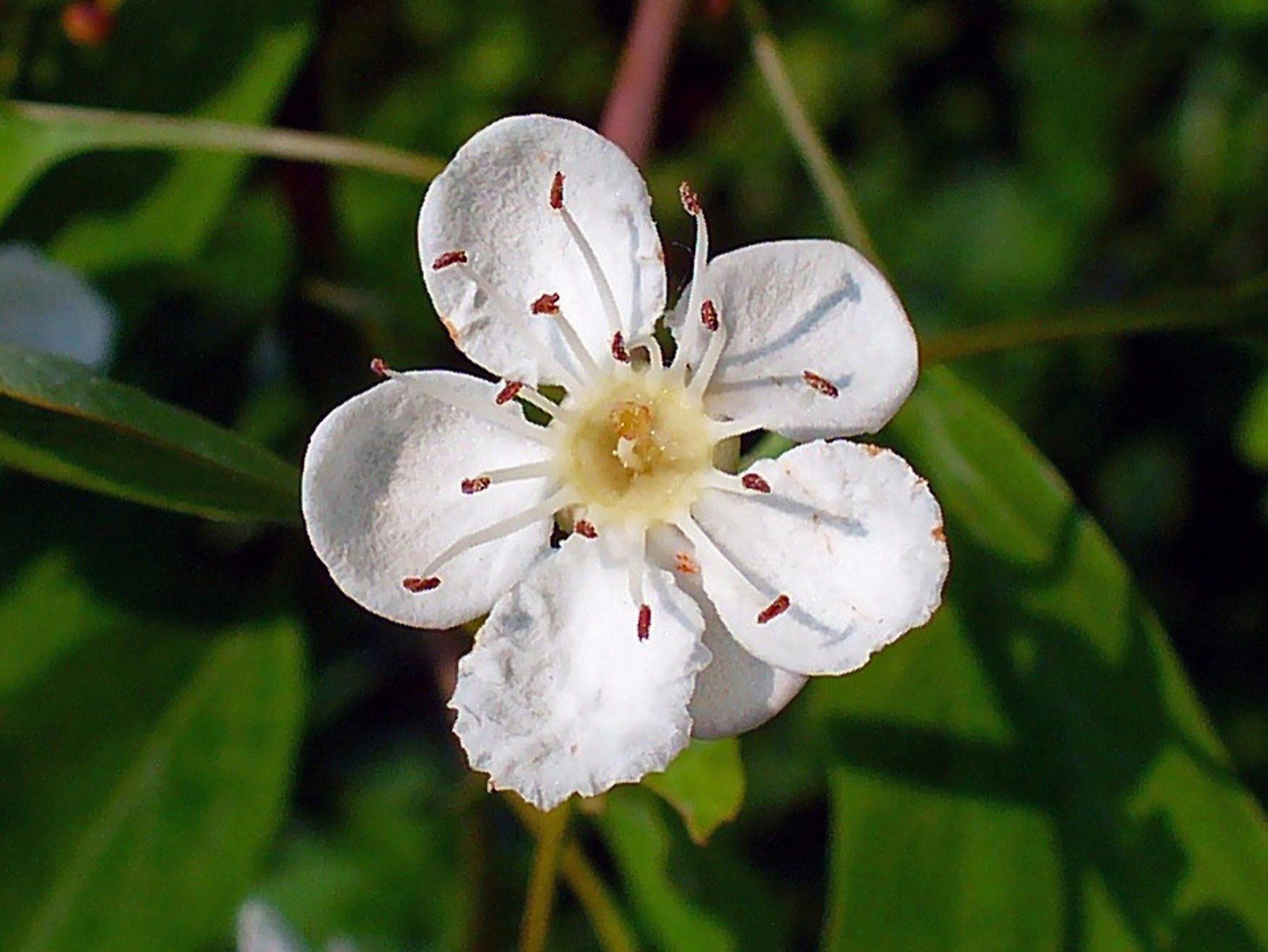
Hawthorn's taxonomic history runs a version of the same problem this site found earlier in Narcissus, March's own genus, though the actual figures involved are different. Wikipedia's entry on the genus, Crataegus, notes that some botanists in the past recognized 1,000 or more species, many of them apomictic microspecies, plants that reproduce asexually and so tend to fragment into countless nearly identical local populations that taxonomists have disagreed for over a century about whether to count separately. Wikipedia calls 200 species "a reasonable number" as a middle estimate; Plants of the World Online, the reference this page checked directly, currently accepts 264. No two sources checked for this page landed on the same figure.
This site's June birth flower page found honeysuckle carrying a scientific name and an English name built from two disconnected sources; hawthorn repeats the pattern, but the two descriptions it carries point at different physical parts of the plant. Crataegus, per Wikipedia's etymology note, comes from Greek kratos, "strength," for the wood, plus akis, "sharp," for the thorns, a name built around what the plant is made of. "Hawthorn" describes something else entirely: Etymonline traces it to Old English hagaþorn, from haw, an obsolete word for a hedge or enclosing fence, plus thorn, a name built around what the plant was grown to do. A reader who only knows the scientific name has learned nothing about how the shrub was actually used in the landscape it grew up in, and vice versa.

"Ne'er cast a clout till May be out" might not mean the month at all
Hawthorn carries an older English folk name that overlaps, confusingly, with the calendar. Wikipedia's own opening line for the genus lists "May-tree" and "Mayflower" among the common names hawthorn goes by, alongside quickthorn, whitethorn, and hawberry. That overlap sits underneath a proverb still repeated in Britain today, "ne'er cast a clout till May be out," don't shed a layer of winter clothing until May is finished, usually taken to mean the calendar month.
Multiple British folklore sources tracing the saying's history read "May" in the proverb as referring to the hawthorn's bloom rather than the month, and tie that reading to a specific calendar event: Britain's 1752 switch from the Julian to the Gregorian calendar, which advanced every date by eleven days. Before that reform, what had been May 1 under the old calendar fell on what is now May 12, closer to when hawthorn actually flowers across much of Britain. Read that way, the proverb isn't instructing anyone to wait for a date on a calendar page; it's instructing them to wait for a shrub to bloom, under a calendar that shifted out from underneath the saying more than 270 years ago.
The superstition about bringing it indoors has a real chemical behind it
British and Irish folklore has long held that bringing hawthorn blossom into a house invites illness or death on the household, an exception carved out only for May Day itself, when gathering it to decorate doorways was traditionally welcomed rather than feared. That superstition isn't pure invention. Hawthorn's flowers release trimethylamine, a compound also produced during the early stages of animal tissue decomposition and present in the same family of chemicals responsible for the smell of rotting flesh; medieval accounts reportedly likened the blossom's odor to the smell that hung over London during the Great Plague. The flower most florists sell as a simple symbol of hope carries a scent built on the same molecule the human nose has evolved to read as a warning.
May's other chart is the plain one
This site's own birthstones by month page checked Jewelers of America's current buying guide directly and found May listed with a single official stone, emerald, no second gem and no disagreement with the Gemological Institute of America or the American Gem Society, unlike March, where those three organizations don't fully agree, or June, which carries three stones instead of one. Measured only by how many entries sit on a chart, May is one of the calendar's plainer months. Measured by what sits underneath either of its charts, gemstone or flower, that's the only thing about the month that's actually plain.