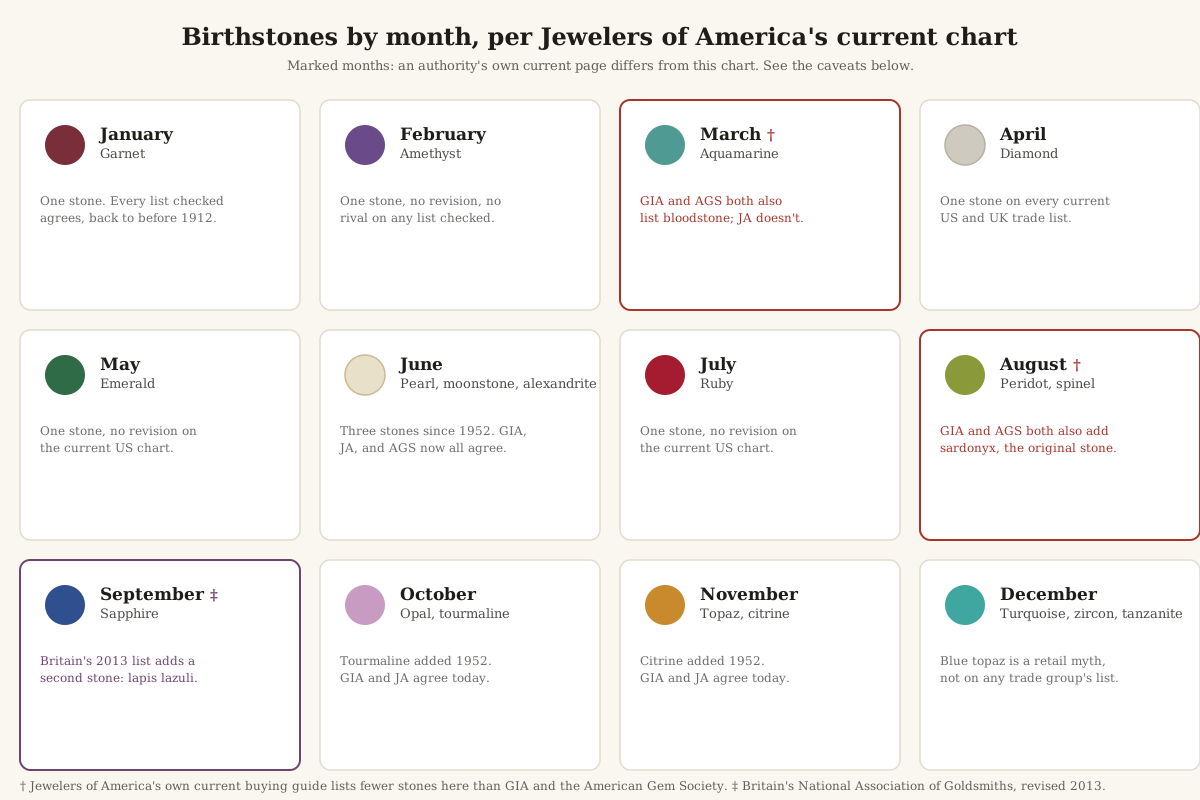
The current chart, checked directly rather than copied from another list
Most pages titled "birthstones by month" are working from a chart somebody else compiled, sometimes years ago. This one was checked directly, cross-referenced with Jewelers of America's live buying guide the week this page was published: January is garnet. February is amethyst. March is aquamarine. April is diamond. May is emerald. June is pearl, moonstone, and alexandrite. July is ruby. August is peridot and spinel. September is sapphire. October is opal and tourmaline. November is citrine and topaz. December is turquoise, tanzanite, and blue zircon.
Split by count, that's seven months with a single official stone on Jewelers of America's current chart (January, February, March, April, May, July, and September) and five months with two or three. June and December each carry three; August, October, and November each carry two. None of that is exotic trivia: it's the direct answer to "how many official birthstones does my month have," read straight off the trade association's current page rather than assembled from whatever a dozen retail blogs happen to agree on.
One 1912 meeting, three later revisions
Jewelers of America itself dates to 1906, when it organized under an earlier name to represent retail jewelers as a trade. The birthstone list came six years later: in 1912, that organization, then called the American National Retail Jewelers Association, met in Kansas City and adopted a single standardized chart, replacing the tangle of regional and folk birthstone traditions retailers had been drawing on until then.
The chart has been revised three times since, and each revision landed on different months. A 1952 update added alexandrite to June, citrine to November, tourmaline to October, and zircon to December. Trade histories disagree on whether Jewelers of America's predecessor carried that revision out or whether a separate body, the Jewelry Industry Council of America, did it instead, and this page did not find a document that settles the question either way. Tanzanite joined December's roster in 2002, added by the American Gem Trade Association. Spinel followed for August in 2016, this time a joint announcement from the American Gem Trade Association and Jewelers of America together. No revision since 1912 has touched January, February, March, April, May, July, or September. Jewelers of America's chart for March has stood at aquamarine alone the entire time, even though the American Gem Society and GIA currently pair it with bloodstone.
Two months where Jewelers of America's chart is the narrow one
Checking three organizations' current pages side by side turns up something most "complete" birthstone charts don't mention: on two months, Jewelers of America's live chart is the narrower one.
March is the clearest case. Jewelers of America's current buying guide names aquamarine alone. GIA's March birthstone page, though, names aquamarine and bloodstone together, and the American Gem Society's current March page does the same, titling the pair "March Birthstones: Aquamarine and Bloodstone" and describing bloodstone as the original stone the month carried before aquamarine was added later. This calendar's earlier page on March goes further into how the two stones swapped which one counted as primary. A trade article once described the American Gem Trade Association as the outlier for including bloodstone, with Jewelers of America and the Gem Society leaving it off instead. That description no longer matches the American Gem Society's current page, which now includes it.
August works the same way. Jewelers of America's live chart lists peridot and spinel, the pairing set by 2016's revision. GIA's August page and the American Gem Society's page for the same month both currently list a third stone alongside those two: sardonyx, which the American Gem Society describes as August's original birthstone, the one peridot was later added beside. Sardonyx never left GIA's or the American Gem Society's charts; it simply isn't on Jewelers of America's live page. Three organizations, checked directly on their current sites, give two different answers for how many official birthstones August actually has.
A stone that moved from December to September: Britain's separate list
The US chart isn't the only current trade standard. Britain's National Association of Goldsmiths published a separate birthstone list in 1937 and revised it in 2013, and per Wikipedia's sourced comparison of the historic and current lists, that 2013 revision still gives September a second stone the American chart doesn't carry there: lapis lazuli, alongside sapphire, a gap this calendar's September page already covers from the sapphire side.
Lapis lazuli isn't new to this calendar's December coverage, though. The same comparison table shows the original 1912 American list actually paired turquoise with lapis lazuli for December, before the 1952 revision dropped lapis lazuli and put zircon in its place. This calendar's page on December covers that month's other well-known mismatch: a fourth stone, blue topaz, that heavy retail marketing treats as official even though no trade group's chart, American or British, has ever listed it. Britain's current list didn't carry lapis lazuli forward on the same month the old American one had it; the stone resurfaced attached to a different one instead, and nothing in the sourced comparison explains why September specifically was where it landed.
November is where the confusion actually shows up at the register
The chart disagreements above are mostly invisible to shoppers, since March and August's extra stones are the kind of detail only someone cross-checking three organizations' pages would notice. November works differently. Topaz and citrine aren't a historical footnote there, they're two stones a customer can find side by side at retail, at very different price points, both under the same "November birthstone" label.
Topaz was November's original stone; the 1952 revision that added citrine did so specifically as a more affordable alternative, and the two have stayed on the chart together since. Topaz spans a wide color and price range, while citrine is a yellow-to-orange quartz that sits lower on the price scale. A shopper who asks two different retailers for "the November birthstone" can walk away with either one, and without context there's no way to tell whether the retailer selling topaz is charging a premium or the one selling citrine is cutting corners, when in practice neither is doing anything wrong. They're just drawing from different ends of the same official list.
The comparison with March and August is direct: on those months, one stone dominates retail while the trade-list alternative stays relatively obscure to ordinary shoppers. November puts two commonly stocked, commonly marketed stones in front of the same customer at the same time, which is why it generates more real purchasing confusion than the organizational disagreements covered above. For a shopper facing the choice, neither stone carries more official standing than the other, so the practical answer is to pick whichever one actually appeals.
Why the charts don't converge
There's no single body with the authority to force Jewelers of America, GIA, the American Gem Trade Association, the American Gem Society, and Britain's National Association of Goldsmiths onto one chart. Each maintains and revises its own list on its own schedule, the same way this calendar's observance pages keep finding multiple organizations each claiming to have started the same day. A shopper who checks two of these sites for March or August, or checks a US site against a UK one for September, isn't finding a mistake on either page; both are accurately reporting what their organization currently says.
A birth-month stone and a zodiac-sign stone are also not the same tradition, even when they land on the same gem by coincidence. This calendar's page on Virgo's date range already found that astrology sites can't agree among sapphire, peridot, or carnelian for Virgo's stone, with no trade group behind any of the three claims. That's a separate and considerably less settled question than which stone belongs to whichever birth month a Virgo happens to be born in.