
Rose and honeysuckle, and a gap already found on this site
The Old Farmer's Almanac names rose and honeysuckle as June's pair, the trade source most modern birth-flower lists draw from. This site's August birth flower page traced why most months carry two flowers rather than one back to a single missing event: unlike birthstones, which trace to a documented 1912 US trade convention, no equivalent meeting ever forced birth flowers onto one agreed list. That absence explains why June has two names on its chart. It doesn't explain what's underneath either name, and for June specifically, both plants turn out to hide more contested and more recent history than the "ancient symbol of love" framing most birth-flower pages settle for.
The rose sold at florists isn't ancient. It's an 1867 hybrid with a disputed family tree.
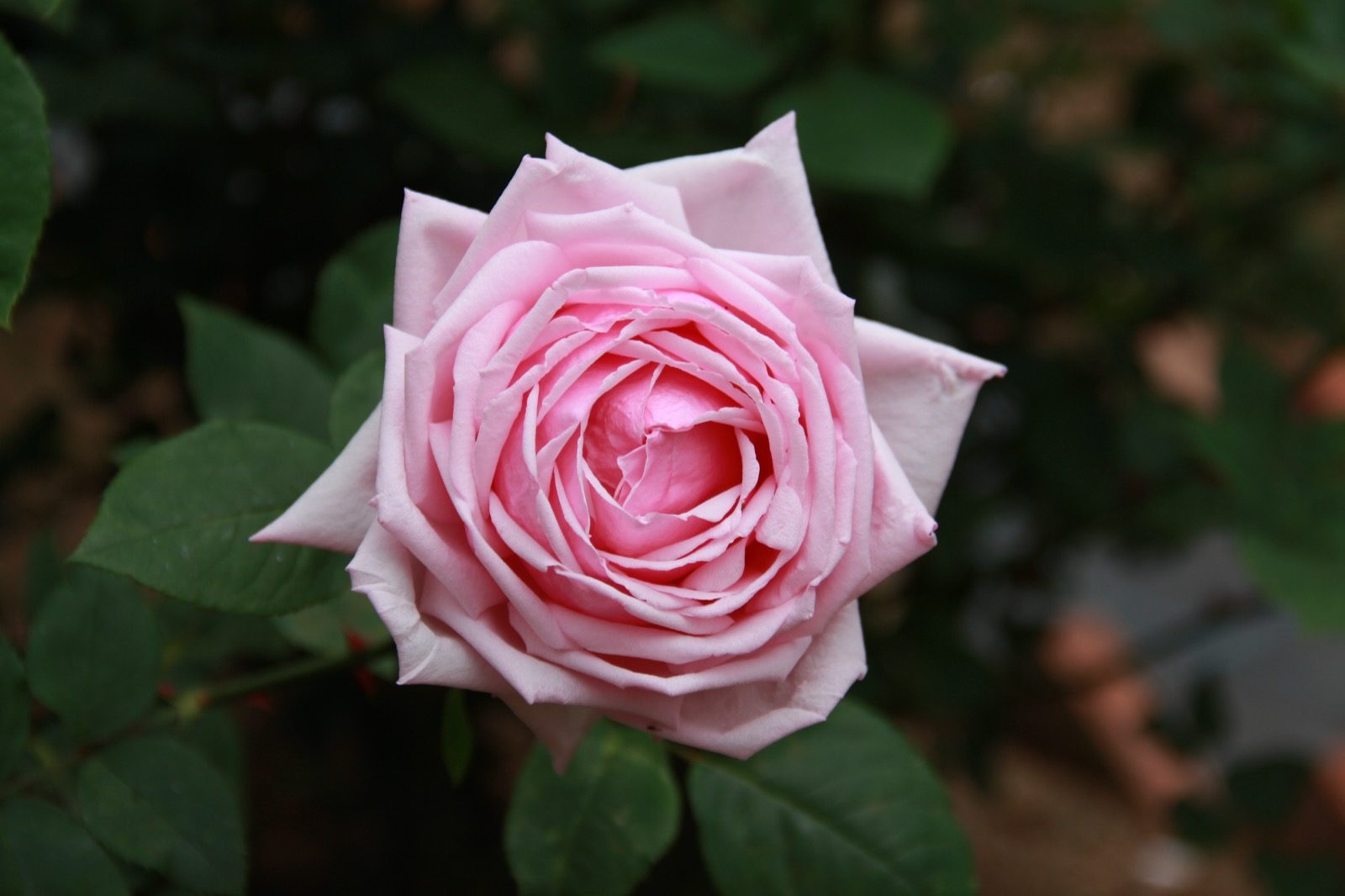
Wikipedia's entry on the rose counts genus Rosa at over three hundred wild species and tens of thousands of cultivars, most native to Asia, with smaller numbers in Europe, North America, and northwest Africa. Roses of some kind have carried symbolic weight for millennia. What most birth-flower photo galleries actually picture, though, the tall, high-centered rose sold one stem at a time in flower shops, traces to a single and comparatively recent cross.
In 1867, in Lyon, France, nurseryman and rose breeder Jean-Baptiste André Guillot introduced a pink cultivar he named 'La France.' Per Wikipedia's entry on the cultivar, it's "generally accepted to be the first hybrid tea rose," a class not formally recognized until the 1880s, and its introduction "is therefore also considered the birth of the modern rose," the point where roses split away from older garden classes into the repeat-blooming, long-stemmed type that still dominates the cut-flower trade.
Even Guillot's own rose keeps a gap in its record. Wikipedia notes that 'La France' "was not systematically bred," so its hybrid parentage "can only be speculated." The one candidate parent Wikipedia names, citing rosarian Peter Beales, is the tea rose 'Madame Falcot,' and even that comes with a question mark attached in the plant's own record: 'La France' may simply be an open-pollinated seedling of that one rose, not the deliberate cross between two named parents that most modern hybrid teas are. The single rose most responsible for the shape of the modern cut-flower industry doesn't have settled parentage, or even settled agreement on whether it had one parent or two.
Even the word "rose" might not have started out Greek
Etymonline traces English "rose" back through Latin rosa to Greek rhodon, the standard textbook path. Wiktionary's entry on rhodon adds a layer most flower pages skip: rhodon itself is thought to be a loanword into Greek rather than a native Greek coinage, most likely from Proto-Iranian wardah, "flower, rose," the same root behind Old Persian, Old Armenian vard, and modern Persian gol, the source of Turkish gül, "rose."
That path isn't settled, either. Wiktionary notes that linguist Rüdiger Schmitt considers a borrowing from Iranian into Greek unlikely on phonological and historical grounds, and flags an alternative: rhodon could instead be a Pre-Greek loan from a language such as Thracian, since the rose was native to Thrace. More than two thousand years after the word entered Greek, etymologists still don't agree on which ancient language handed it over. October's birth flower carries its own unresolved naming history, of a more recent kind: this site's October birth flower page found that marigold's English name already belonged to a different, unrelated European flower before it was ever attached to the one sold as October's birth flower today.
Honeysuckle carries two unrelated names, and the vine in many photos is the invasive one
Honeysuckle's scientific name and its English common name come from two entirely separate sources, a split most birth-flower copy glosses over by treating "Lonicera" as though it simply meant honeysuckle in Latin. It doesn't. Wikipedia's entry on the genus explains that "the name Lonicera stems from Adam Lonicer, a Renaissance botanist," specifically Adam Lonicer (1528-1586), a German physician whose 1557 herbal, the Kräuterbuch, Wikipedia's biographical entry on him credits as his major work. Carl Linnaeus attached Lonicer's name to the genus more than a century and a half after Lonicer's death.
The English name has nothing to do with Lonicer. Etymonline dates "honeysuckle" to around 1300, and the earliest recorded sense isn't even the vine: the word first meant clover, specifically red clover, with the climbing-vine sense not attested until roughly a century later, around 1400. Both senses trace to Old English hunigsuge, literally "honey-suck," a description of the practice of drawing nectar directly from a flower. Two names, from two unrelated sources, that happened to land on the same genus of roughly 158 species (Wikipedia's count) native across North America, Eurasia, and North Africa.
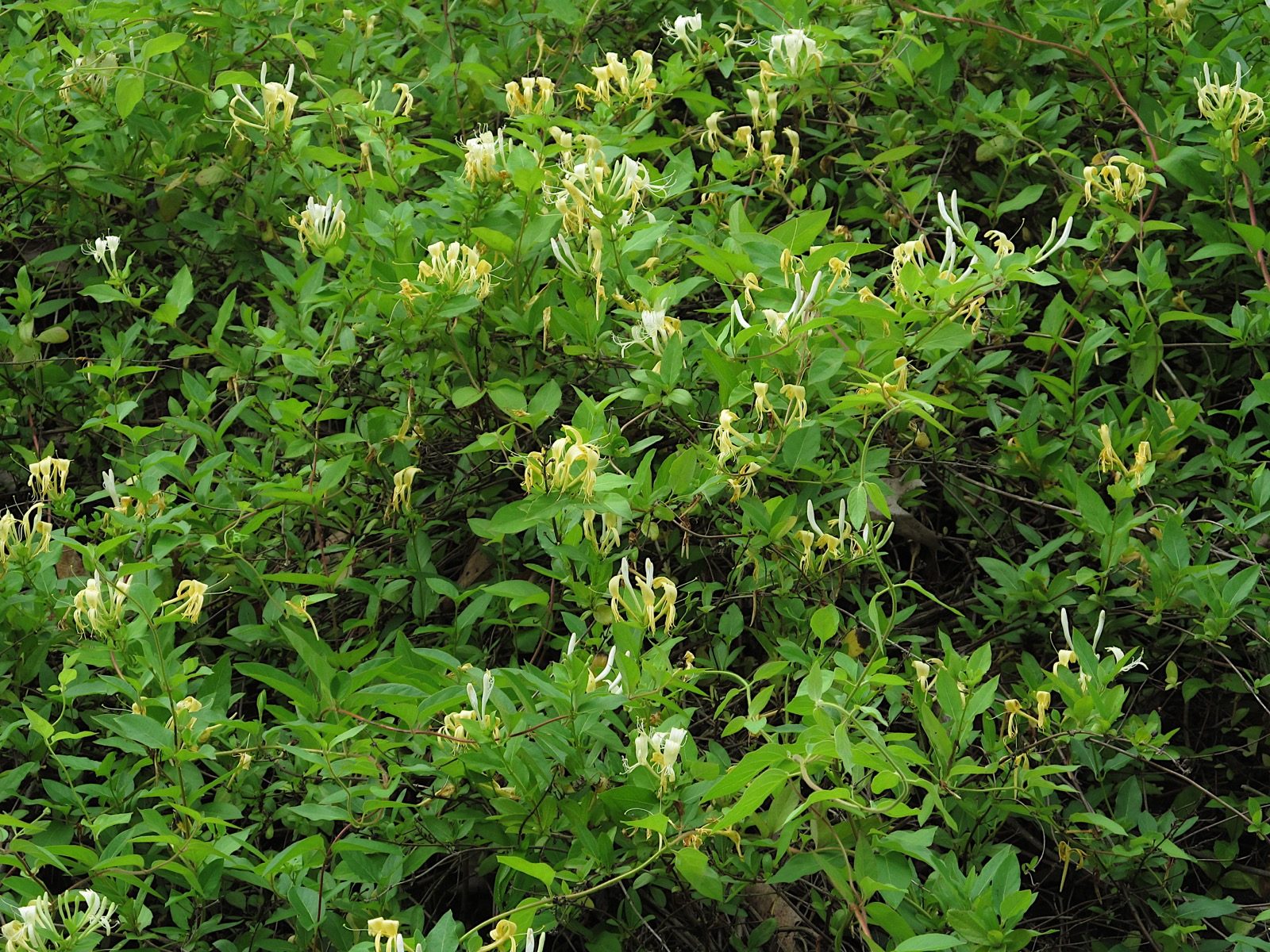
The species question matters more than most galleries let on. Among those 158 species, Wikipedia singles out Lonicera japonica, Japanese honeysuckle, as "an aggressive generalist species" and one of the most widely planted ornamental honeysuckles worldwide. Introduced to the US from Japan in the early 1800s, it's now classified as a noxious weed in 46 states; it's prohibited for sale in Connecticut, Illinois, Massachusetts, and Vermont, and banned outright in Indiana and New Hampshire, per Wikipedia's entry on the species. Its older stems are often hollow inside, per the same entry. A native alternative, Lonicera sempervirens, trumpet or coral honeysuckle, native to the eastern US, is among the species Wikipedia's genus entry lists as a particular draw for North American hummingbirds. Most stock photography attached to "June birth flower" pages doesn't name which species is pictured, and given how much more common Japanese honeysuckle is along roadsides and in home gardens across the eastern and central US, there's a real chance the vine illustrating a US reader's birth flower is a species their own state prohibits them from planting. This site's July birth flower page covers a comparable case of mistaken botanical identity: what most guides describe as Egypt's sacred lotus is, botanically, a water lily, not a true lotus at all.

What the Old Farmer's Almanac says the two flowers mean
The Almanac ties rose meaning to color: red for romance ("I love you"), pink for happiness and admiration, white for innocence and purity, orange for desire and excitement, and yellow for cheer and happiness, though older folklore reads yellow as jealousy instead. Honeysuckle, in the Almanac's framing, stands for happiness and positive energy, layered with an older association around nostalgia: the vine was traditionally planted near homes both as a sign of affection for a new love and, separately, to evoke nostalgia for old flames and to honor people who had died.
June's other unusual number: three birthstones, not one
The flower chart isn't the only place June breaks from a typical month. This site's own birthstones by month page found that Jewelers of America's current chart gives June three official birthstones at once, pearl, moonstone, and alexandrite, a count only December also carries. Alexandrite wasn't part of the original 1912 chart; that page traces its addition to a 1952 revision, the same update that added tourmaline to October, citrine to November, and zircon to December. Whatever kept June's flower pairing from settling into one plant, the month's separate gemstone chart didn't settle into one stone either, for an unrelated reason documented four decades later.