
One flower, until a different almanac adds two more
The Old Farmer's Almanac names exactly one flower for March: the daffodil. That breaks from the pattern on this site's June birth flower page, where the Almanac's chart pairs a primary flower with a secondary one for most months, rose and honeysuckle, gladiolus and poppy. March's own page on the Almanac's site carries no "and" in its title, just "The Daffodil."
A different publication complicates that. Farmers' Almanac is a separate company from The Old Farmer's Almanac, despite the near-identical name, a distinction Almanac.com's own editors have had to clarify publicly because of how often readers confuse the two. Farmers' Almanac's March page is titled "Daffodil: The March Birth Flower (Plus Jonquil and Cherry-Blossom Alternatives)." Depending on which almanac a reader lands on, March's birth flower is one plant or three.
Jonquil isn't another name for daffodil. It's a separate species.
"Daffodil," "narcissus," and "jonquil" get used interchangeably often enough that Farmers' Almanac lists jonquil as though it were simply another word for March's flower. The New York Botanical Garden's own explainer on the three names treats that as a mistake worth correcting: jonquil refers specifically to Narcissus jonquilla and its hybrids, one species within the genus, not a second name for daffodils generally. Gardening Know How's comparison piece calls the loose, interchangeable use of "jonquil" for any daffodil "technically incorrect," even though it's become common.
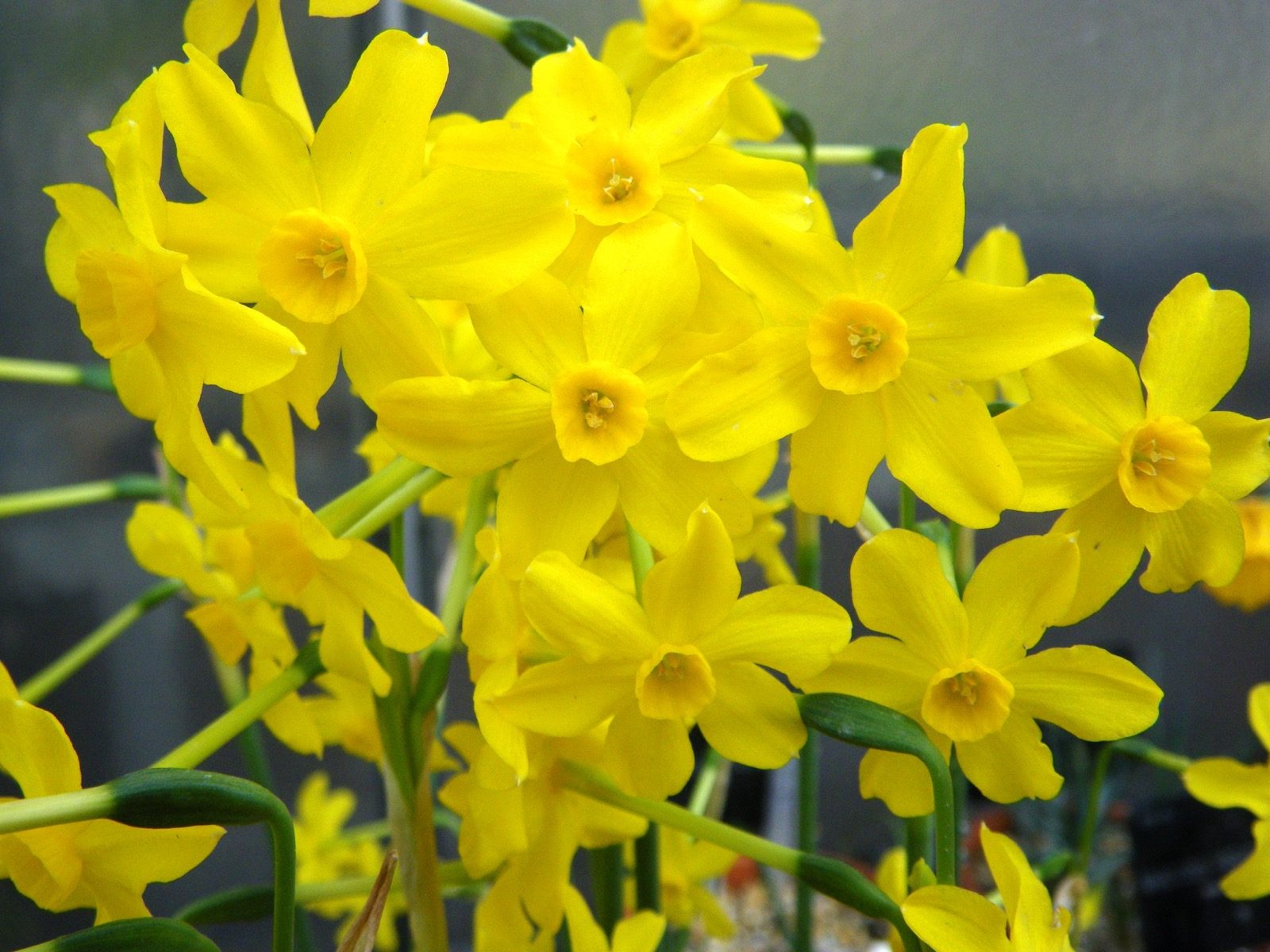
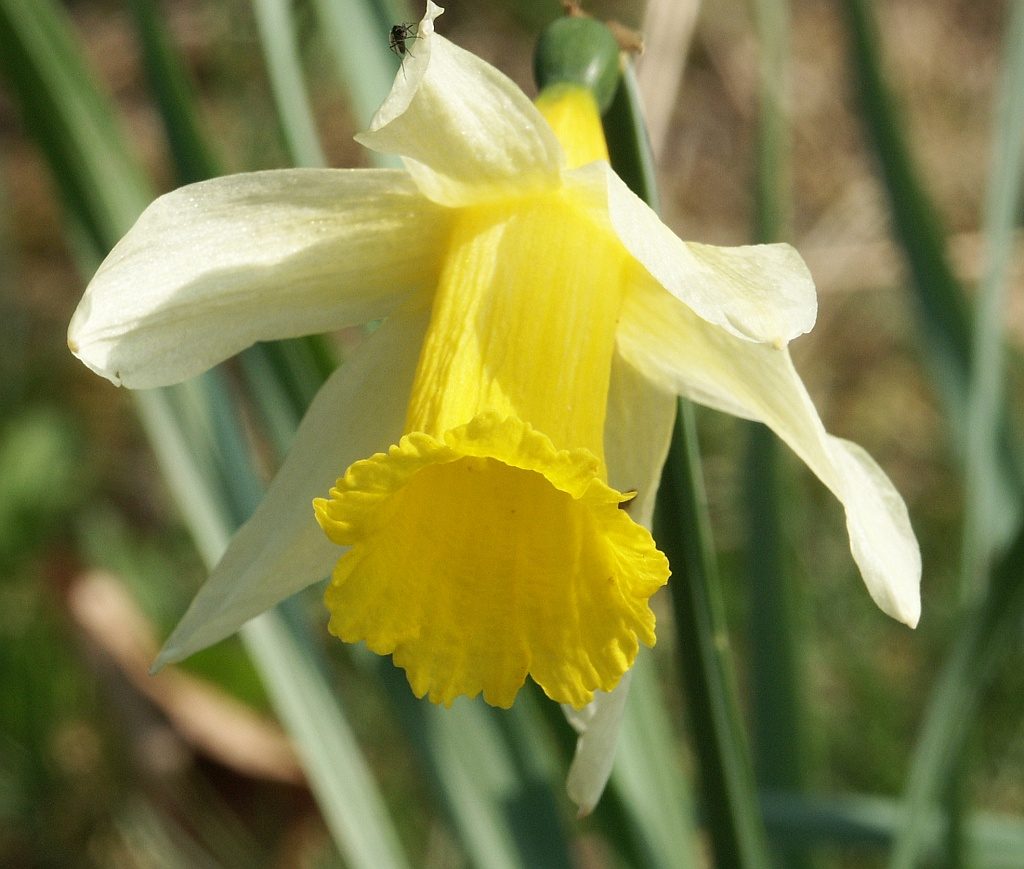
The two aren't hard to tell apart once the traits are named. Daffodils carry one flower per stem on slim, sword-tipped leaves and a light scent. Jonquils, per the same NYBG and Gardening Know How comparisons, produce several flowers per stem, up to five, on slender, round-tipped leaves, from a shorter, hollow stem, with a fragrance strong enough that it's the trait most commonly used to identify one in a garden. Jonquils also run hardier in warm climates, thriving as far south as USDA zone 8, a range that doesn't suit most daffodil cultivars as well. This site's July birth flower page runs into a similar naming mix-up from a different angle: the plant most guides call Egypt's sacred lotus is actually a water lily, only distantly related to a true lotus.

How many species of daffodil exist? Nobody has counted the same number twice.
Wikipedia's list of Narcissus species lays out a count that has swung by more than tenfold depending on who did the counting and when. Carl Linnaeus, working from a narrow set of specimens in 1753, recognized six species. Botanist Fernandes accepted 22 in 1951 and had revised that up to 63 by 1968. Blanchard counted 65 in 1990; Erhardt counted 66 in 1993. The International Daffodil Register listed 87 species in 2006, the high point of the modern era. Then a 2008 genetic study by Zonneveld cut the number back down to just 36. The Royal Horticultural Society's own December 2017 register, the current standard reference, accepts 83 species names, while more than 300 additional names that once described separate species are now filed as synonyms.
Wikipedia's summary attributes most of the swing to how narrowly or broadly a "species" gets defined, plus how natural hybrids get classified. A botanist working from a wide view of each species, lumping closely related populations together, ends up with a short list; one working from a narrow view, splitting them apart, ends up with a long one. Naturally occurring hybrids compound the problem: an "ancient hybrid" found spread across a wide area is often promoted to full species status, while a "recent hybrid" found growing only as scattered individuals among its parent plants usually isn't. There's no committee empowered to settle the question the way there is for cultivated varieties; the RHS runs the international registry for garden hybrids and cultivars, sorted into 13 horticultural divisions, but the wild species count underneath that system has never stopped moving.
The word "daffodil" hides a letter nobody can explain
Etymonline traces "daffodil" back to Middle English "affodill," recorded around 1400, itself from Medieval Latin affodillus, from Latin asphodelus, from Greek asphodelos, a word Etymonline lists as of unknown origin in its own right. English picked up the "d-" spelling by the 1540s, and the added letter has never been fully explained. Etymonline's own leading theory points to the article fusing onto the word in Dutch, "de affodil," the Netherlands having long been a source for bulbs. The Oxford English Dictionary's entry catalogs additional proposals nobody has settled on either: a French preposition doing the same job, "d'asphodel"; or a playful, childish sound-shift of the kind that turns "Edward" into "Ted" or "aunt" into "tante." Two layers of the word's history are unresolved: the ultimate Greek root is unexplained, and so is the English letter stuck onto the front of it. A borrowed name causes a different kind of confusion over on this site's October birth flower page, which traces how "marigold" in English was already taken, by an unrelated European flower, long before it got attached to the plant sold under that name in October now.
Narcissus: named for the myth, or the myth named for the poison?
The genus's scientific name and the mythological youth it's usually said to honor share a possible root in Greek narke, "numbness" or "torpor," a connection some sources tie directly to the plant's own sedative, toxic alkaloids. That link isn't settled etymology, though. Linguist Robert Beekes, whose work is cited on the word's etymology, argues that the ending on Narkissos points to a pre-Greek word rather than a genuine derivation from narke, meaning the name may have entered Greek from an earlier, non-Greek language of the region, with the resemblance to "numbness" arriving after the fact rather than explaining the name's actual origin. Whether the flower was named for what it does to the body, or the resemblance is coincidence dressed up as etymology, is a question the sources checked for this page don't resolve.
The toxicity isn't theoretical
Daffodil bulbs contain lycorine, an alkaloid that causes vomiting and gastrointestinal cramping, and the danger has produced a documented poisoning case, not just a warning label. In February 2012, UK health investigators, in a report now archived by the UK Health Security Agency, identified 11 people in Bristol, ages 5 to 60, who were sickened after eating daffodils bought at a supermarket that had displayed pre-bloom daffodil stalks next to the vegetables, unmarked as inedible. All 11 developed vomiting within 12 hours; none required hospitalization.
The Bristol case wasn't an isolated incident. Trade publication The Grocer reported that Public Health England, writing to major UK retailers in 2015 to warn them off displaying daffodils near produce, disclosed that the agency had logged 63 inquiries over the previous six years from people who had mistaken daffodil bulbs for onions or the stems for a vegetable, including 27 cases in the single year before that letter went out. April's birth flower carries a comparable, commonly overstated toxicity claim: this site's April birth flower page found the sweet pea's toxin causes a narrower disease than the famine-era illness most sites call lathyrism.
What the flower is supposed to mean, and March's other one-stone chart
The Old Farmer's Almanac ties daffodils to rebirth, new beginnings, and good fortune, fitting for a flower that's often among the first to bloom after winter. Older folklore attaches a specific superstition to how the flowers are given: a bunch of daffodils is said to bring good luck, while a single stem given alone is said to bring the opposite. Wales claims the daffodil as its national flower, worn each March 1 for St David's Day, alongside a separate Welsh legend holding that whoever spots the season's first bloom will have a prosperous year ahead.
The single-stone pattern here has a match elsewhere on the calendar. This site's own March birthstone page found that Jewelers of America's current chart names only aquamarine for March, no second stone, even though the Gemological Institute of America and the American Gem Society both present aquamarine and bloodstone as a pair. Two separate charts, run by different organizations for different products, arrived at the same one-name-only treatment for the same month.