
Holly and narcissus, the same two-flower pattern
The Old Farmer's Almanac, the same trade source behind the pairs this site has already covered for July through November, names holly and narcissus, specifically the paperwhite, as December's flowers. This site's August birth flower page traced why birth-flower lists keep landing on two names instead of one: birthstones got a single 1912 trade convention to settle the chart, and birth flowers never had an equivalent meeting, so competing 19th-century flower dictionaries went uncorrected and the modern lists that followed absorbed more than one nominee per month.
December's pair carries an unusual amount of misinformation for two flowers this common. One has a real ancient Roman gift-giving custom attached to it, plus a much newer addition that regularly gets presented as if it were the same kind of ancient. The other is the same bulb behind two separate midwinter traditions, on opposite sides of the world, that landed on opposite meanings.
Holly: only the female plants grow berries
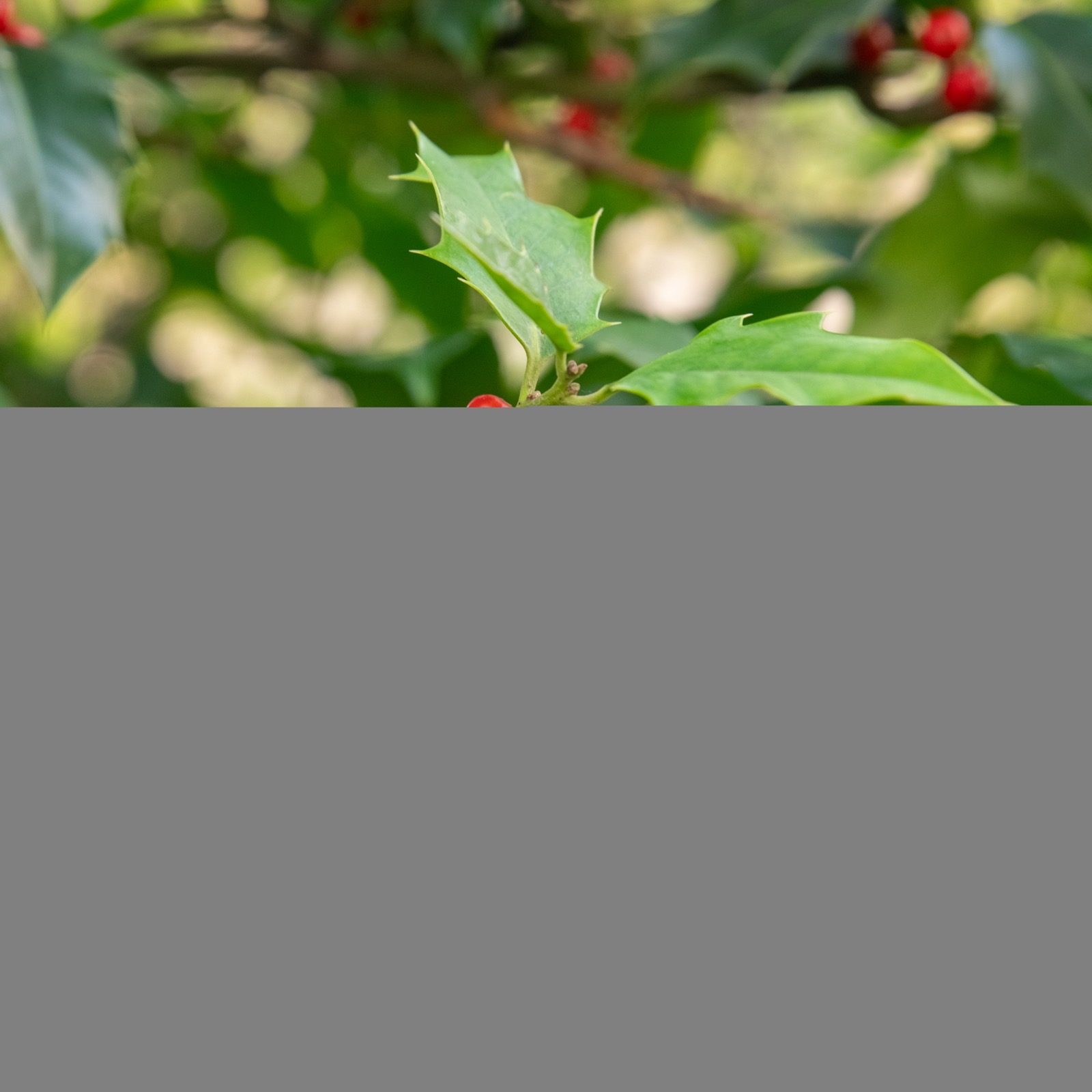
Holly is usually dioecious, meaning an individual plant carries either the flowers that produce pollen or the flowers that produce fruit, rarely both, according to Wikipedia's entry on Ilex aquifolium, the European holly most associated with Christmas decoration. Only female plants grow the familiar red drupes, and only when a male plant grows close enough to fertilize them; a solitary holly bush, however healthy, can go its whole life without producing a single berry. The Old Farmer's Almanac states the practical version of the same fact more plainly: hollies are male and female, and gardeners generally need one of each to get the berries most people associate with the plant. Berries and leaves alike are also mildly toxic to dogs, cats, and horses, per the ASPCA, typically causing vomiting and diarrhea rather than anything more severe.
The species name doesn't come from water, despite its visual resemblance to "aqua." Aquifolium is Botanical Latin built from acus, needle, and folia, leaf, a description of the plant's spiny leaf margins rather than anything to do with moisture, per Wikipedia. The English common name has a separate, older root: "holly" is a shortened form of the Old English holegn or holen, recorded well before the Latin binomial existed.
A real Roman festival, and a king that isn't
Some of what gets attached to holly checks out. Ancient Romans gave holly during Saturnalia, the winter-solstice festival honoring Saturn, and those who received it hung it in their homes for protection against evil spirits, according to the Old Farmer's Almanac. Celtic peoples separately brought evergreen boughs, holly included, into their homes at the same time of year, treating the plant as a symbol of protection and of life persisting through the dark months. Christian tradition later reworked the same plant's imagery rather than replacing it: the spiny leaves came to stand for Christ's crown of thorns, the red berries for drops of his blood.
The "Holly King," a figure many lifestyle and florist articles present as part of that same ancient Celtic belief system, doesn't come from any ancient Celtic source. Per Wikipedia's account of the Holly King and Oak King, the pairing first appears in the poet Robert Graves's 1948 book The White Goddess, where Graves built the figure out of his own comparisons to older paired-hero myths, Lleu Llaw Gyffes and Gronw Pebr among them, and out of ideas James Frazer had laid out decades earlier in The Golden Bough. Wiccan writers Stewart and Janet Farrar folded the Holly King into modern seasonal ritual decades later, in their 1981 book Eight Sabbats for Witches, and it's that 20th-century synthesis, not a surviving ancient text, that most current "Holly King" content actually traces back to.
Narcissus: a myth, and a name that may mean "numb"
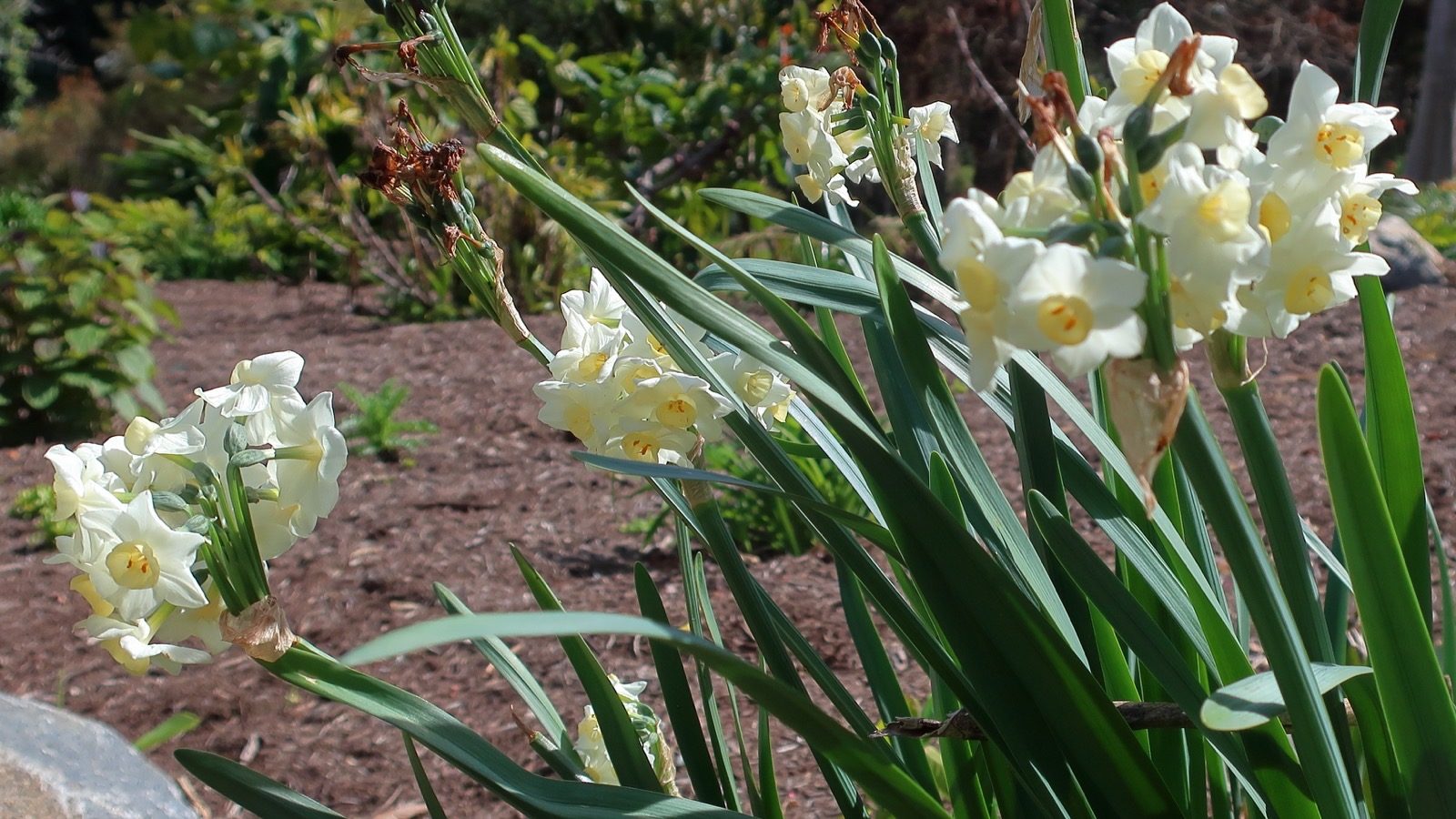
The narcissus flower's name comes from Ovid's Metamorphoses, where the youth Narcissus rejects the nymph Echo, then falls for his own reflection in a still pool and can't look away, wasting there until a white-and-yellow flower grows in his place, per Wikipedia's account of the myth. That same story is also the source of "narcissism" as a term for excessive self-regard, borrowed from the flower's name centuries later.
The flower's own name may run deeper than the myth. Wikipedia's entry on the Narcissus genus notes that the word's exact origin is unknown, but it's often linked to the ancient Greek narkō, to make numb, the same root behind the English word narcotic. That's not just wordplay: every Narcissus species contains the alkaloid lycorine, concentrated most heavily in the bulb, and ingesting it produces numbness followed by more serious neurological symptoms in poisoning cases, the kind of effect the name may describe directly rather than by coincidence.
The Old Farmer's Almanac states plainly that every part of the paperwhite is poisonous, with the bulb the most toxic part, worth flagging for a bulb that gets forced into bloom on a kitchen windowsill every December, often within reach of pets or small children. That guidance doesn't hold evenly across the whole genus, though: research on the related species Narcissus papyraceus found roughly five times more alkaloid concentrated in the stem than in the bulb, according to Wikipedia's entry on the genus, a reminder that "the bulb is the toxic part" is closer to a rule of thumb than a fixed rule.
.jpg)
The same bulb, opposite meanings, on opposite sides of the world
The Old Farmer's Almanac's own page on the paperwhite adds a detail most florist copy skips: the flower is "sometimes associated with the Chinese Lunar New Year." That's an understatement. The species behind the December paperwhite, Narcissus tazetta, reached China as early as 690 CE according to historical records, per Cornell Botanic Gardens, and the subspecies grown there today, sold and gifted as the "Chinese Sacred Lily," is one of the most favored flowers of Lunar New Year tradition, forced into bloom in a shallow dish of water and pebbles, the same method used to force Western Christmas paperwhites. A narcissus that opens exactly on New Year's Day is considered a sign of good fortune for the year ahead.
The two traditions share a bulb and a forcing method but nothing else. The Western meaning runs through Ovid's myth, a warning about vanity and fatal self-absorption. The Chinese meaning, attached to a close relative of the same species, is prosperity and renewal, with no shared lineage connecting the two interpretations. Two cultures independently decided the same midwinter bulb meant something, and landed on opposite answers.
December's other reference points
For the gemstone side of a December birthday, this site's December birthstone page covers the month's three official stones, turquoise, zircon, and tanzanite, and why blue topaz, despite heavy retail marketing, isn't actually one of them.
And for why birth-flower lists, unlike birthstone lists, tend to run in pairs rather than a single flower, this site's November birth flower page traces that gap back to the same absent 1912-style trade convention this page opened with.