
What World Smile Day is
World Smile Day is an unofficial observance held on the first Friday of every October, built around a single, deliberately small idea: do something kind for someone else and try to make them smile. It carries the trademarked catchphrase "Do an act of kindness. Help one person smile." In 2026 it falls on Friday, October 2.
The day has no legal status anywhere. No government recognizes it, no country grants time off for it, and banks, schools, and offices keep a normal schedule. What sustains it is the Harvey Ball World Smile Foundation, a Worcester, Massachusetts nonprofit that continues to serve as the day's official sponsor, along with social-media participation, novelty retail tie-ins, and local Worcester events held in Ball's hometown each year.
The observance is inseparable from a single symbol: the smiley face, which its creator spent the last two years of his life trying to reclaim from decades of commercial dilution by giving it, once a year, a purpose he could still control.
The date: the first Friday in October, not a fixed day
Unlike most observances on this calendar, World Smile Day is not pinned to a single calendar date. It falls on whichever day is the first Friday of October, which means the exact date shifts from year to year across a seven-day range: October 2 in 2026, October 1 in 2027, as late as October 6 in 2028. The Harvey Ball World Smile Foundation's own site states the rule directly and has confirmed October 2, 2026 as this year's date. Later the same month, World Mental Health Day falls on October 10.
There is a second, unrelated observance with an almost identical name that causes real confusion: National Smile Day, held every May 31. It was founded in 2018 by Dr. Tim Stirneman and Jim Wojdyla of Compassionate Dentalcare, an Illinois dental practice, and is built around dental health rather than Ball's kindness campaign. The two days share no founder, no foundation, and no date rule; they only share two words of their name.
From a $45 drawing to a global symbol
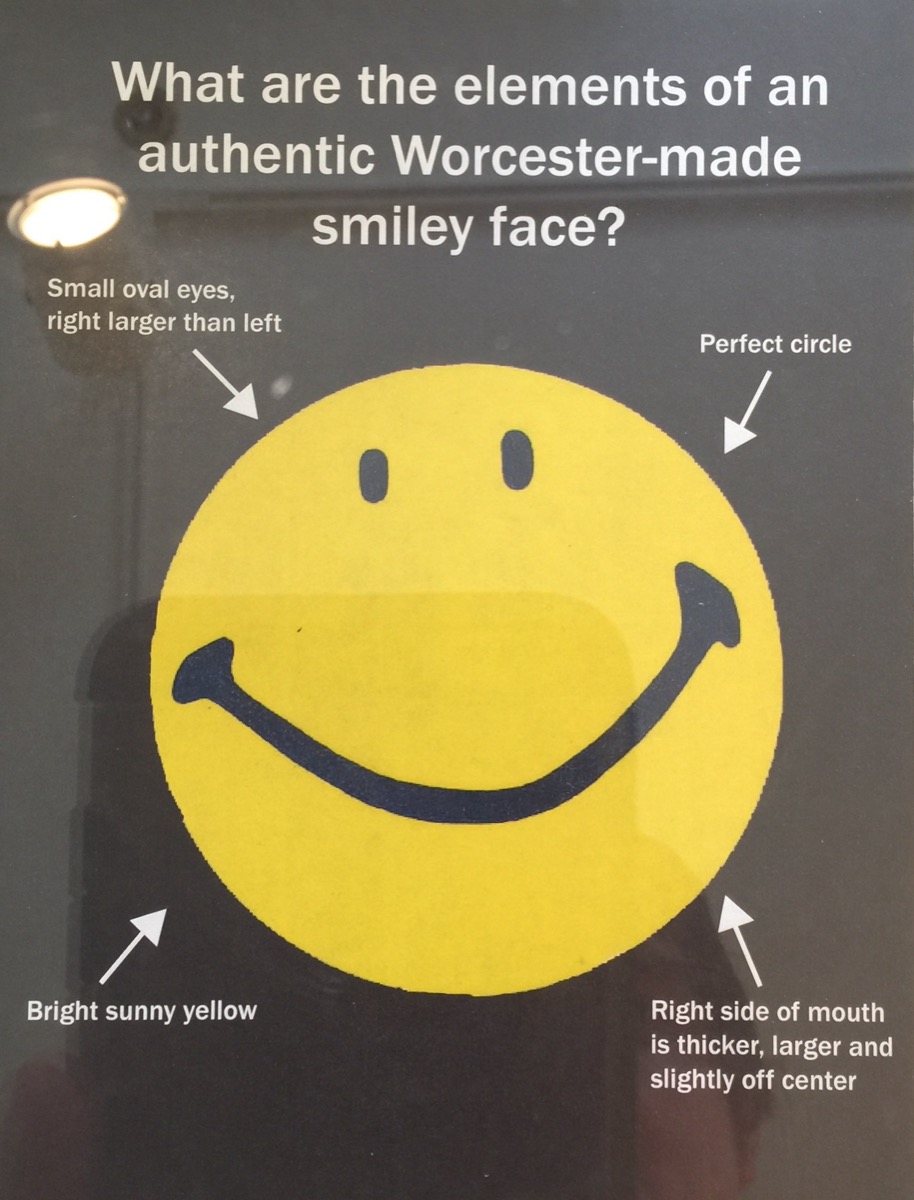
The smiley face itself predates World Smile Day by thirty-six years. In 1963, State Mutual Life Assurance Company of Worcester had just absorbed Guarantee Mutual Company of Ohio, and the merger left employee morale low. The company hired Harvey Ball, a local freelance commercial artist, to design something to put on a button. Ball drew a sunny yellow circle, added a smile, decided a smile alone could be flipped upside down into a frown, and added two eyes to fix it. The whole design took about ten minutes, and State Mutual paid him $45. He did not file for a trademark.
State Mutual ordered 100 pins at first. Demand overran that estimate almost immediately, and the company began ordering in lots of 10,000. By 1971, more than 50 million smiley-face buttons had been produced and distributed, according to Wikipedia's account of the design's history, and the image had become one of the most reproduced graphics of the twentieth century, appearing on merchandise Ball had no legal claim to and no financial stake in.
That gap between the symbol's popularity and its creator's control over it is the backdrop for everything that follows.
Why Ball invented a day about it
By the late 1990s, Harvey Ball had watched his design get absorbed into decades of unlicensed commercial use, cultural parody, and eventually the early internet's emoticon culture, with no way to steer what the symbol was made to represent. In 1999, he created something different from the original drawing: an annual observance he could define on his own terms and, this time, protect by trademark. He set it on the first Friday of every October, named it World Smile Day®, and gave it a single instruction rather than a slogan to sell anything: do an act of kindness, and try to help one person smile.
The first World Smile Day was held that October in Worcester, Ball's hometown, on a modest, local scale. It stayed that way, run directly by Ball, for the less than two years he had left to run it himself. Among the observances on this calendar with a single named inventor, Talk Like a Pirate Day is the closer comparison: both founders are still alive and have told a consistent story for decades, a contrast this page returns to below.
A foundation founded after its founder died
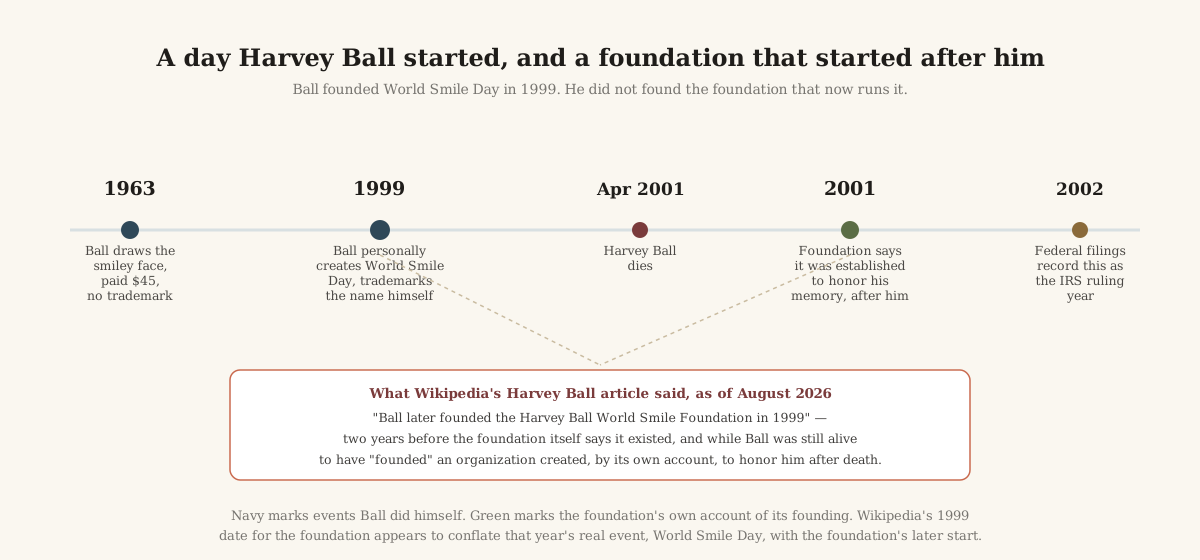
Harvey Ball died on April 12, 2001, less than two years after holding the first World Smile Day. What happened next is where the record on this observance genuinely splits.
The organization that now runs World Smile Day, the Harvey Ball World Smile Foundation, gives its own founding date on its "About" page: 2001, described explicitly as being established "to honor the name and memory of Harvey Ball." That phrasing only makes sense if the foundation came after him, built by people who wanted to preserve what he had started, not by Ball while he was alive to run it himself. Independent federal nonprofit records support that timeline rather than contradict it: ProPublica's Nonprofit Explorer lists the organization, EIN 04-6946615, with an IRS ruling year of 2002, which is the kind of one-year lag between incorporating a nonprofit and receiving formal federal tax-exempt recognition that shows up routinely in filings for genuinely new organizations, not for one that had already been operating for two years.
Wikipedia's article on Harvey Ball tells a different story in its opening paragraph, stating that "Ball later founded the Harvey Ball World Smile Foundation in 1999." Weighed against the foundation's own account of itself, that claim has two specific problems: it places the foundation's founding two years before Ball's death, and it credits Ball with founding an organization whose own stated purpose is to honor him, a description that reads as a posthumous tribute rather than a self-founded body. The more likely explanation is a compression error rather than a competing fact: 1999 is a real date in this story, but it is the year Ball founded World Smile Day, not the year anyone founded the foundation that today bears his name. A comparable compression runs through the record behind this site's World Teachers' Day page, where several secondary sources misdate a 1949-51 congressional resolution to 1953 simply because that's the year Eleanor Roosevelt happened to write about it.
What the foundation does today
The Harvey Ball World Smile Foundation describes its focus as small, grassroots charitable efforts that would otherwise struggle to find funding or attention, a deliberately modest scope compared to large national charities. It remains the official sponsor of World Smile Day each year and, through its licensing arm, Harvey Ball Smile Limited, holds and manages trademark rights not just to the original smiley design but to a wider family of related marks built up since Ball's death.
The result is a slightly unusual structure for an observance on this calendar: the day itself was invented and run, at least initially, by one identifiable person, while the institution that has kept it going for a quarter-century since his death was, by its own telling, built specifically because he could no longer run it himself. Movember shows a related but distinct pattern, where the founders built their own organization while still directly running it, rather than one assembled afterward by others.