.jpg)
A date the organizers reset every year
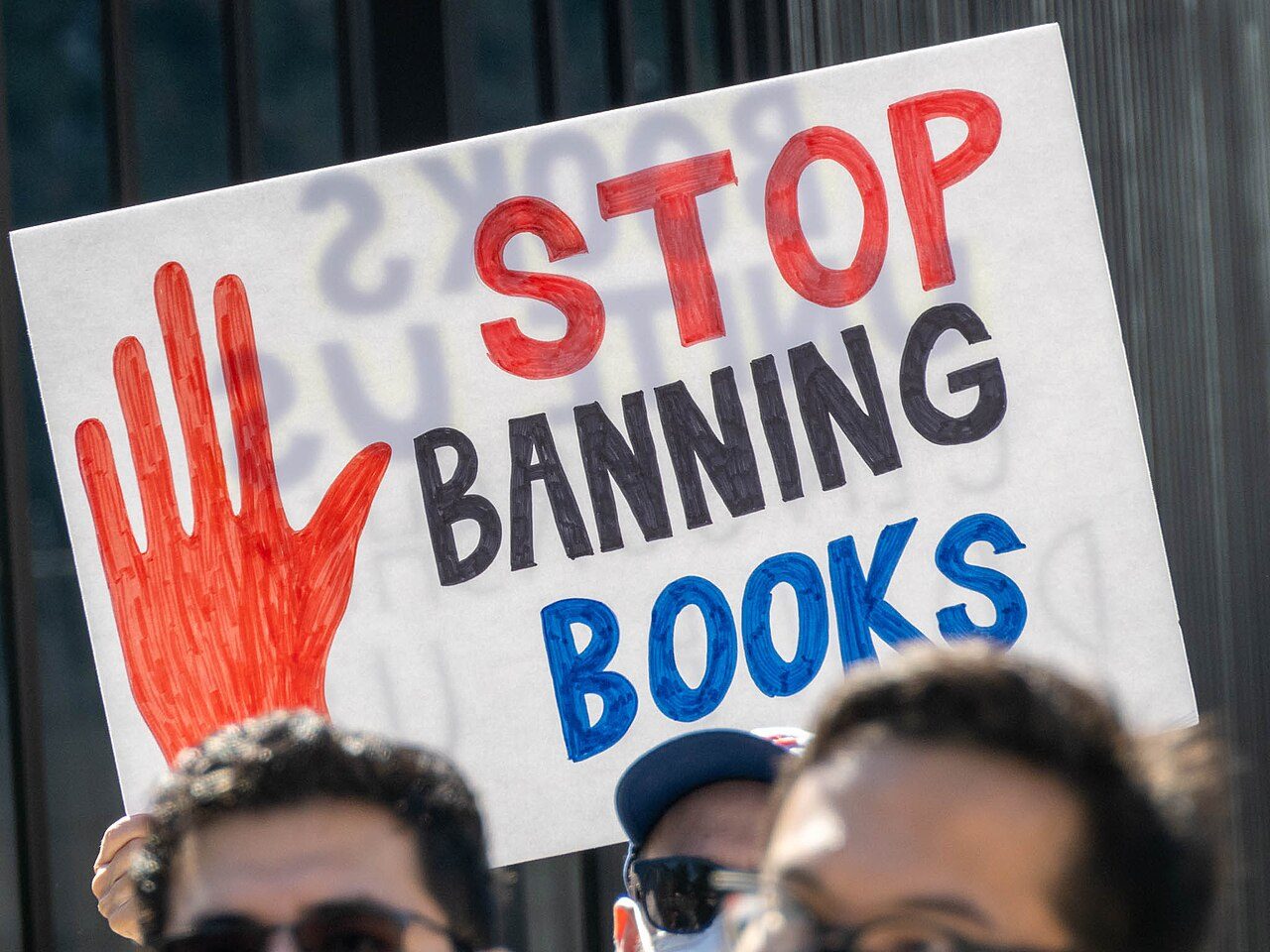
Banned Books Week 2026 runs October 4 through 10, under the theme "Let Books Be. Protect the Freedom to Read," announced by the American Library Association and the Banned Books Week Coalition. That is worth stating plainly because a lot of what gets repeated about the week's timing is out of date. Library guides and calendar sites commonly describe it as falling "the last week of September," and for a run of years that was accurate: the 2022 observance ran September 18-24, and 2024 ran September 22-28. But the pattern broke in between and has broken again since. 2023 ran October 1-7. 2025 moved to October 5-11. 2026 stays in early October at October 4-10. In three of the last four years, a reader trusting the "last week of September" rule would have shown up at the wrong time.
No organization publishes a formula explaining the back-and-forth, and none was found for this page. What has held steady across all five years checked here is a narrower, structural regularity: every occurrence starts on a Sunday and runs through the following Saturday. Which Sunday is a fresh decision each year, usually surfacing in a spring theme announcement, not a standing rule a reader could compute in advance.
Where it actually came from: a 1981 mailing and a Supreme Court case
The immediate spark, by the most detailed contemporaneous account available, was political correspondence rather than a library-world initiative acting alone. In January 1981, the Reverend Jerry Falwell's Moral Majority sent a mass mailing urging supporters to scrutinize their local school libraries and textbooks for "immoral, anti-family and anti-American content" and to report anything they found. The American Library Association, which already tracked censorship complaints as part of its ordinary work, reported those complaints rising through 1981. TIME covered the broader trend that year in a piece titled "The Growing Battle of the Books."
Judith Krug, who had directed ALA's Office for Intellectual Freedom since 1967, worked with two other organizations to answer it. The New York Times' own September 1982 coverage, at the time, put it directly: "a national coalition" made up of the American Booksellers Association, the American Library Association, and the National Association of College Stores designated that week as the first Banned Books Week, aiming, in the Times' words, "to encourage resistance by communities against efforts to suppress books." Krug told the Times that the censorship pressure of the moment reflected censors "searching for something unreal—the good old days," and named Falwell's letters specifically as the kind of climate the campaign was responding to.
The same year carried a second, unrelated but overlapping event: in June 1982, the Supreme Court decided Island Trees Union Free School District v. Pico, ruling that school officials cannot remove books from a school library simply because they object to the ideas in them. The ruling did not create Banned Books Week and the two are not the same campaign, but they landed in the same twelve months as two responses to the same underlying dispute over who controls what students and patrons can read. One later account, not sourced to the Times' own 1982 reporting, instead credits the Association of American Publishers with first approaching Krug; this page follows the contemporaneous coalition description over that later retelling, but flags the discrepancy rather than picking a side silently.
Three Congresses, seven resolutions, zero floor votes
Banned Books Week has never been proclaimed by a President or established by federal statute, and this page found no exception in any year checked. Congress has come closer than it once did, but not close enough to change that. In the 117th Congress, Rep. Jamie Raskin introduced H.Res. 1392 in September 2022, recognizing Banned Books Week and condemning what the resolution called sweeping attacks on books; it was referred to committee and, per GovTrack's own tracking, died without a floor vote when that Congress ended. Sen. Brian Schatz introduced a Senate companion, S.Res. 838, that same Congress on November 17, 2022; it died the same way.
The same pairing tried again in the 118th Congress: H.Res. 733 and S.Res. 372, both introduced in late September 2023, met the identical fate. Schatz brought a second Senate attempt within that same Congress, S.Res. 857, in September 2024; it also died without a vote, bringing the 118th Congress's total to three resolutions on its own. A third Congress followed suit: in the 119th, H.Res. 797 and S.Res. 443 were both introduced October 8, 2025, timed to that year's observance. As of this page's research in August 2026, both were still sitting at "introduced," the first stage of the legislative process, with no committee action recorded yet. Three separate two-year Congresses, seven resolutions between the two chambers, and not one has reached a floor vote in either the House or the Senate.
What last year's numbers actually show
The American Library Association's Office for Intellectual Freedom (OIF) tracked 4,235 unique titles challenged in 2025, the second-highest total OIF has ever documented; the record was 4,240 in 2023. Of those challenged titles, 1,671, or 40 percent, represent the lived experiences of LGBTQIA+ people or people of color. OIF separately logged 713 total attempts to censor library materials or services in 2025, of which 487 targeted books specifically, down from 821 attempts in 2024. What changed was not just volume but source: 92 percent of 2025's book challenges were initiated by pressure groups, government officials, or other decision-makers, up from 72 percent the year before, while less than 3 percent came from individual parents acting alone. "In 2025, book bans were not sparked by concerned parents, and they were not the result of local grassroots efforts," OIF Executive Director Sarah Lamdan said in the ALA's own April 2026 release of the data. "They were part of a well-funded, politically-driven campaign."
ALA's own definitions matter here and are worth stating precisely, because the two words get used loosely elsewhere. ALA defines a ban as the actual removal of material from a library because of someone's objection, and a challenge as an attempt to have material removed or restricted, whether or not that attempt succeeds. By that definition, OIF recorded 5,668 books actually banned from libraries in 2025, 66 percent of everything challenged that year, both the highest raw count and the highest conversion rate from challenge to ban that OIF has recorded across its 1990-2025 tracking. Another 920 books were censored through narrower access restrictions, such as relocation to a different section or a new parental-permission requirement, short of outright removal. The most targeted individual titles in 2025 were Sold by Patricia McCormick, The Perks of Being a Wallflower by Stephen Chbosky, and Gender Queer: A Memoir by Maia Kobabe, according to ALA's own top-11 list for the year.
Is anything actually "banned"? The dispute that's as old as the week itself
The word "banned" has been contested since close to the campaign's founding, and this page found no sign the dispute has settled. Focus on the Family, a conservative Christian organization, has argued for years that nothing is really banned in the strict legal sense, since a book pulled from one school library usually remains available for purchase elsewhere; its vice president of public policy, Tom Minnery, has called the framing "the 'banned' books lie." Mitchell Muncy made a similar argument in The Wall Street Journal, that the censorship being protested does not exist in the way the campaign implies. Boston Globe columnist Jeff Jacoby made a narrower, related point: that most books on ALA's annual lists were challenged, not actually removed.
ALA and its defenders answer that the challenge-versus-ban distinction does not resolve the underlying concern. Former ALA president Camila Alire has said the campaign highlights "hundreds of documented attempts to suppress access to information," and that a library restricting access for others is itself a form of censorship regardless of whether the book still exists somewhere else. Doug Archer, a past chair of ALA's Intellectual Freedom Committee, has argued that treating only outright government bans as real censorship sets an unreasonably narrow bar, one that would count strong, successful defense of a book as proof that no threat existed in the first place. Writing in Slate, Ruth Graham took a more specific middle position: that the campaign's rhetoric sometimes blurs a school declining to add a book to its curriculum with a public library removing a book from general circulation, two different kinds of decision that deserve separate scrutiny rather than one shared label.
An international companion, and where this sits on this site's spectrum
Banned Books Week is not only a U.S. campaign. Amnesty International runs a parallel international observance during the same week, built around individual "focus cases": named writers it says have been jailed, harassed, or killed for what they wrote, with country entries in recent years spanning Azerbaijan, China, Cuba, Egypt, Gambia, Iran, Myanmar, Russia, and Sri Lanka. That international campaign draws on the same week and the same freedom-to-read framing but is organized separately from the ALA-led U.S. coalition, with its own annual list rather than a shared one.
This site has now checked the federal paper trail behind several awareness observances, and Banned Books Week sits at one end of a rough spectrum. Domestic Violence Awareness Month reached an actual congressional joint resolution behind a specific year, 1989's Public Law 101-112, and Congress went back and renewed that same one-year designation once more for 1991, but nothing has renewed it since. ADHD Awareness Month has a documented run of five consecutive Senate resolutions, 2004 through 2008, before the practice simply stopped. National Suicide Prevention Month has two Senate resolutions agreed to by unanimous consent, in the 115th and 116th Congresses, but no House resolution has ever passed and its most recent 2025 attempt stalled in both chambers. Banned Books Week's own record, three separate two-year Congresses trying since 2022 and seven total resolutions between both chambers, is the most persistent pattern of the group and the only one that has drawn a fresh attempt in every single Congress since it began, yet it has produced fewer floor votes than any of them: zero, in either chamber, in any year checked.