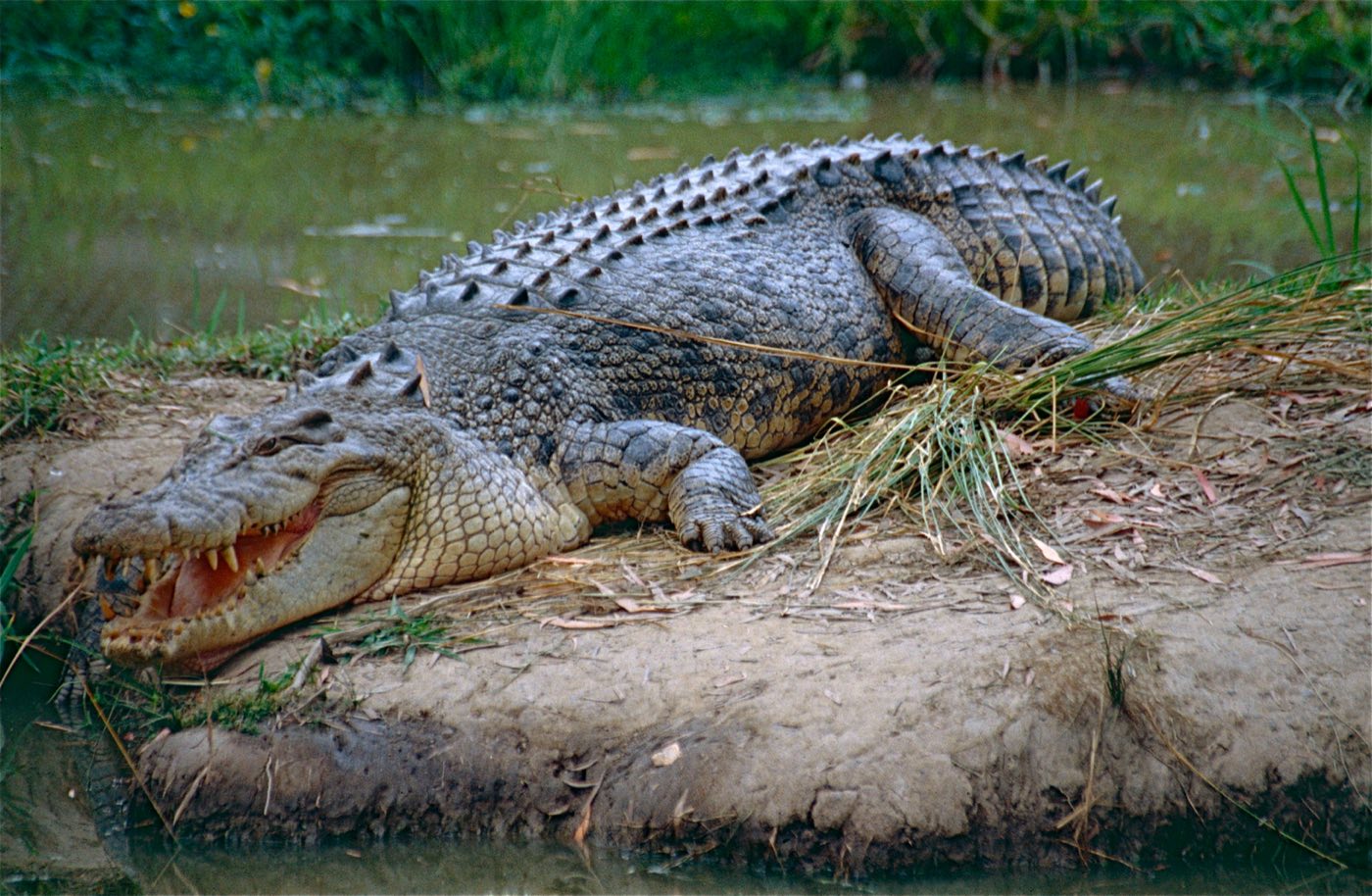
_(10106331165).jpg)
What National Wildlife Day is
National Wildlife Day is an unofficial US observance held on September 4, encouraging attention to endangered species, habitat loss, and the work of zoos, sanctuaries, and conservation nonprofits. It carries no legal or governmental status: no federal law or state proclamation recognizes it, government offices and banks run their ordinary September 4 schedule, and no time off is attached to it. In 2026 it falls on a Friday.
It spreads mainly through zoos, wildlife sanctuaries, conservation nonprofits, and social media rather than through any civic institution, the same pattern behind National Cat Day and National Dog Day elsewhere on this calendar. What sets this page apart is not the marketing around the day but a genuine disagreement, across the sources that cover it, about when and why it started.
Who gets credit, and which year
The founder is not seriously in dispute: Colleen Paige, the same pet and family lifestyle expert behind National Cat Day (2005) and National Dog Day (2004), is named as National Wildlife Day's creator by every calendar site checked for this page. What is in dispute is the year and the story behind the date.
National Today's own history timeline for the observance carries a single entry dated 2006, titled "National Wildlife Day was born." Its accompanying text states that Colleen Paige "created National Wildlife Day in honor of the late wildlife conservationist Steve Irwin," going on to describe him as the famed Crocodile Hunter. Read together, that entry implies the day began in 2006, as a direct response to Irwin's death on September 4 of that year.
Calendarr tells a different sequence. Its background section states plainly that "National Wildlife Day was founded in 2005 by Colleen Paige, to bring awareness to the problems that the planet's wildlife faces," and only afterward adds: "In September 2006, the world lost one of its best wildlife experts and conservationists, Steve Irwin. Paige dedicated National Wildlife Day to honour Steve Irwin's work." In that version, the day predates Irwin's death by roughly a year and was rededicated to his memory once he died, rather than created because of it.
Both tellings agree on the founder, the September 4 date, and the eventual connection to Irwin. Neither cites an original 2005 or 2006 announcement, registration, or press release from Paige herself to settle which sequence is correct, and no source checked for this page attempts to reconcile the two. Readers should treat the founder's identity as settled and the exact year, along with whether Irwin's death caused the day or merely reshaped it, as unresolved.
Three wildlife days, three founders, zero overlap
"Wildlife day" is not one observance. At least three exist, each with its own founder, its own founding story, and no connection to the others beyond the word in the name.
National Wildlife Day, covered on this page, falls September 4 in the United States and traces to Colleen Paige, a private individual, in either 2005 or 2006 depending on the source. World Wildlife Day is an entirely different, government-backed observance: the United Nations General Assembly proclaimed March 3 as World Wildlife Day in a resolution adopted December 20, 2013, choosing that date because it marks the anniversary of the 1973 signing of CITES, the Convention on International Trade in Endangered Species of Wild Fauna and Flora, in Washington, D.C. World Wildlife Conservation Day is a third, separate observance, created in 2012 by the US State Department: on November 8, 2012, then-Secretary of State Hillary Clinton launched a "Call to Action" on wildlife trafficking at an event held at the department, and December 4 was set as the annual date going forward.
The three overlap in subject and even in name, which is exactly what makes them easy to conflate. But one traces to a single private founder with no registration on record, one traces to a UN General Assembly resolution tied to an international treaty's signing date, and one traces to a named US Cabinet official's own department. Confusing any of them for another means citing the wrong founder, the wrong date, and the wrong sponsoring body all at once.
What the real numbers say
Coverage of wildlife observances tends to cite one of two very different-sounding figures without explaining why they differ. The most commonly repeated one is that roughly one million species are at risk of extinction, a figure that traces to the 2019 IPBES Global Assessment Report, prepared by 145 experts from 50 countries and approved at the panel's plenary session in Paris that May. That report's headline finding was that around one million animal and plant species are threatened with extinction, many within decades, framed as roughly one in eight of all species on Earth.
A second, smaller figure comes from the IUCN Red List, the formal, species-by-species conservation assessment that has been running since 1964. As tracked by Our World in Data using the IUCN's own release, the Red List classified about 48,600 species as Vulnerable, Endangered, or Critically Endangered in its 2025 data; broken down by group, that works out to about 21 percent of evaluated vertebrates and 41 percent of evaluated amphibians specifically.
The two numbers are not competing estimates of the same thing, and neither is wrong. The IUCN's 48,600 counts only species that have gone through its individual, one-by-one assessment process, a small slice of the roughly 8.7 million species a 2011 study in PLoS Biology (Mora et al.) estimated exist on Earth, most of them insects and other invertebrates that have never been formally evaluated at all. IPBES's one million is a broader, model-based extrapolation intended to capture that unassessed majority, not a list of confirmed individual cases. A reader encountering either number in isolation, without that context, has no way to tell that a strikingly smaller figure and a strikingly larger one are both defensible answers to almost the same question, asked in different ways.